
Why You Must Read: The Most Complex Machine On Earth
The silent war behind the global war for semiconductor manufacturing

Please allow me to start with a confession: this book was far down on my recommendation lineup. I wasn’t going to write about it for another two months.
Truth be told, this is one of the most dense books I have come across in a while. I say this as a compliment. On the bookshelf, however, this book can be categorised under several headings. It’s business non-fiction but reads like a fiction thriller, fusing technology and geopolitics while diving into the economics of manufacturing across continents.
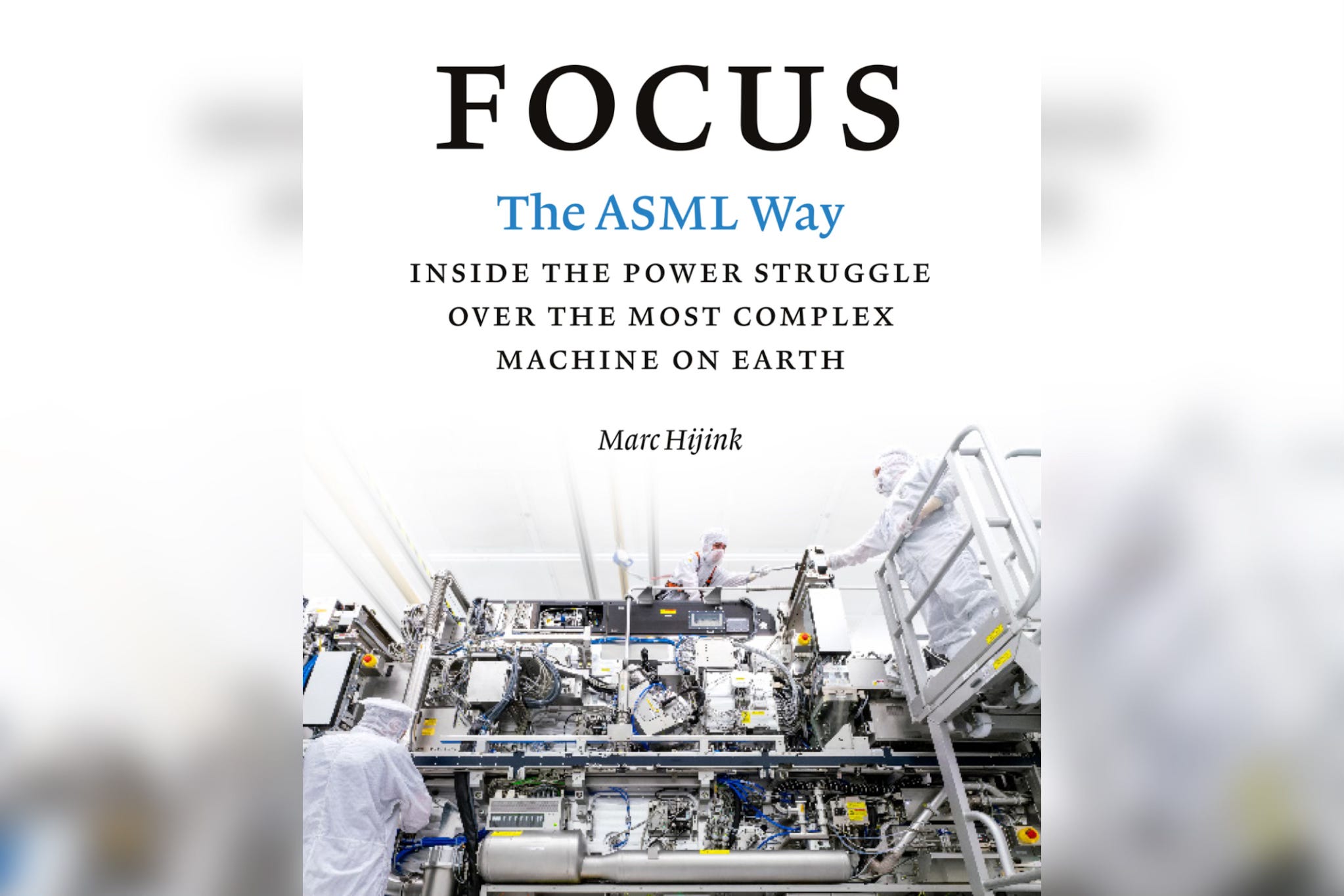
Marc Hijink’s Focus: The ASML Way – Inside the Power Struggle over the Most Complex Machine on Earth is a fitting tribute to Dutch innovation, amongst many things.
We are all acquainted with the politics surrounding the manufacturing of semiconductors, but rarely do we care about the industry that fuels the most important companies on the planet (TSMC, Samsung, and Intel). However, this isn’t about them, but rather about ASML—or Advanced Semiconductor Materials Lithography Holding N.V. (the original name).
Think of it this way. Your latest iPhone from Apple carries the fastest chip (they brag about it in advertising), and while the tech conglomerate is not a chip manufacturer, it contracts Taiwan’s TSMC for its Apple Silicon A-series chips.
Meanwhile, TSMC turns to an industry worth billions of dollars. These are the manufacturers of machines that run the semiconductor plant, and each machine is sourced from a different supplier. This is where ASML comes into play.
With a global monopoly on EUV lithography machines, they are indispensable to the entire process. The simplest explanation of a lithography machine comes from the book itself. Think of it as a super-precise projector, which casts the same image onto the same wafer hundreds of thousands of times at lightning speed.
This process is repeated until a wafer full of chips begins to form. Eventually, each of these chips will house billions of tiny integrated circuits. The process takes months, with each chip requiring hundreds of layers perfectly aligned, one on top of the other. A slight deviation, and the entire exercise is futile. Money wasted. Time wasted. Supply chains be damned. Goodbye, iPhone.
Think of it as a machine the size of a steam engine, with the capacity to shoot an invisible beam of light with a precision that can be narrowed down to a nanometer, or one-millionth of a millimetre. The science behind the process is mind-twisting. Reality stranger than fiction, plays out each day at the ASML campus in Veldhoven, Netherlands.
The company has more than 44,000 employees across 60 locations in 16 countries, and here is the most baffling fact: the transfer of a lithography machine from ASML requires seven Boeing 747s. The machine is assembled at the destination. Only 100,000 components, roughly, in each machine.
Even the Chinese haven’t been able to replicate it yet, though efforts remain underway. ASML, and consequently the Dutch, are caught in a trade war between the Americans and the Chinese. For now, they are toeing the line of the White House, but what happens the day Taiwan falls? What happens when Beijing is finally able to get its EUV lithography machine going?
Marc Hijink deserves all the accolades for putting together one of the best business biographies of all time. To the ones who track the semiconductor industry, ASML is a routinely discussed topic, and for the ones oblivious to the world that runs our world, this book is the ideal starting point.
This is the best book I have read this year, and we are only halfway through January. Every page is a goldmine of information. Pick this up without a second thought.
Author’s Note: Each Saturday, I’ll be publishing book recommendations. Please note that this is not a ‘book review’, but merely a suggestion, given the events around us.
Read this blog today, right after the PMs visit to Netherland, and guess what the headlines are, "Tata Electronics, ASML join hands for semiconductor manufacturing in India". This is going to be huge!
ASML is proof that the most powerful monopoly in the world isn't in Silicon Valley it's in Eindhoven